
Searching Scripture
John 5:39

Welcome to this next installment of our series on ‘eternal life’ in the Gospel of John. If you’re new to this series, here’s where we started and what we’re up to. Thanks for coming along for the ride.
Tucked into a lengthy discourse concerning how the disciples might verify Jesus’ identity and teaching we find this single statement placed by John the Gospeler on Jesus’ lips:
‘You search the scriptures because you think that in them you have eternal life, and it is they that testify on my behalf.’
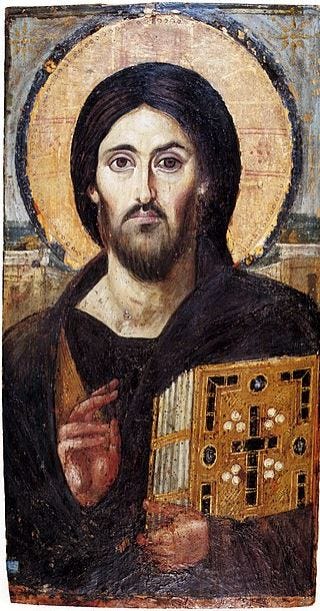
Here Jesus tells his listeners that while they diligently investigate their written sources (ereunaó meaning search, seek, investigate, and graphé meaning writings or Scripture), they are missing the point of those Scriptures entirely.
He suggests that they are searching for ‘eternal life,’ a life-transforming connection with the Divine. The closest thing they will find in Hebrew Scripture is God’s declaration: “You will be my people, and I will be your God.”
This promise first appears in Genesis, then in Exodus, and finally in the prophets Ezekiel and Jeremiah. The climax comes in Jeremiah 31:33 — For this is the covenant that I will make with the house of Israel after those days, declares the Lord: I will put my law within them, and I will write it on their hearts. And I will be their God, and they shall be my people.
God’s law - God’s way of being - was to be written on the hearts of God’s people. And the first-century Jews for whom this gospel was written were accustomed to diligently reading the words of God in the Law and the Prophets as a way of engraving those words onto their own hearts.
Jesus sees that diligence, that desire for union with God, and in a single sentence redirects their attention to a radical new way of understanding that union. Rather than finding it in the writings, they are to find it in him. The scriptures they study so intently ‘testify on my behalf.’ The Greek literally says, ‘bear witness to me.’ This is exactly what was promised in the opening to this gospel: ‘…to all who received him, who believed in his name, he gave power to become children of God, who were born, not of blood or of the will of the flesh or of the will of man, but of God.’ Union with God, becoming a child of God, was available simply by receiving Jesus as God’s singular messenger and presence.
How many of us search the Scriptures still, imagining that there is some secret truth locked in those words?
What exactly are we seeking in our diligent study?
Information about how to be righteous?
Prescriptions for human behavior, and punishments for breaking God’s rules?
Guidelines for who’s ‘in’ and who’s ‘out’?
Hot takes in the form of single verses so we can out-Jesus our conversation partners?
Honestly, no matter what you’re looking for, you will probably find it. As my dear Hebrew Bible professor in seminary taught us, what you find depends on the (metaphorical) lenses you wear while reading the text.
She also taught us that the biblical text reads us - tests our hearts and our understandings - as we read it. We are laid bare before the message of God’s word.
This single sentence about searching the scriptures reminds us that Scripture is intended to point us to a Person, or perhaps, a Presence.
The words of God are meant to reveal the Word of God (John 1:1).
If this is true, then God’s way of being cannot be trapped in book form, but must be incarnated.
And I don’t mean that in a ‘supersessionist’ way; that is, I’m not claiming that God’s revelation in Jesus replaces the Hebrew scriptures or the Jewish people as Chosen People.
I mean it more in the sense that ‘the letter kills, but the Spirit gives life.’ (2 Cor 3:6)
The written word alone, whatever we may seek or find within it, is not sufficient to give Life, especially that elusive quality this gospel calls ‘eternal life.’
Whether incarnate in the form of a Chosen People, or in Jesus the Christ, or in those who have chosen to receive him as the One sent by the Father to be the light of the world, ‘eternal life’ calls us to be animated by a Spirit of Love and Light, Breath and Water, Community and Justice.
Mere reading isn’t enough. We are called to live the truth we encounter in Christ. Each of us will express that truth in our own way, and many of us will join with others who experience and express that truth in similar enough ways that we will form communities. And, radical as this might be, I believe that this form of incarnation, this embodiment of who we find in Christ and the scriptures that bear witness to him, is enough.
How do you read Scripture? What are you looking for as you comb carefully through those pages? To what, or whom, does the Bible bear witness when you consider it in this light?
Words on a page are inert. They are bread crumbs to guide us to the actual path of following a living voice.
🙏🙏